Sangria
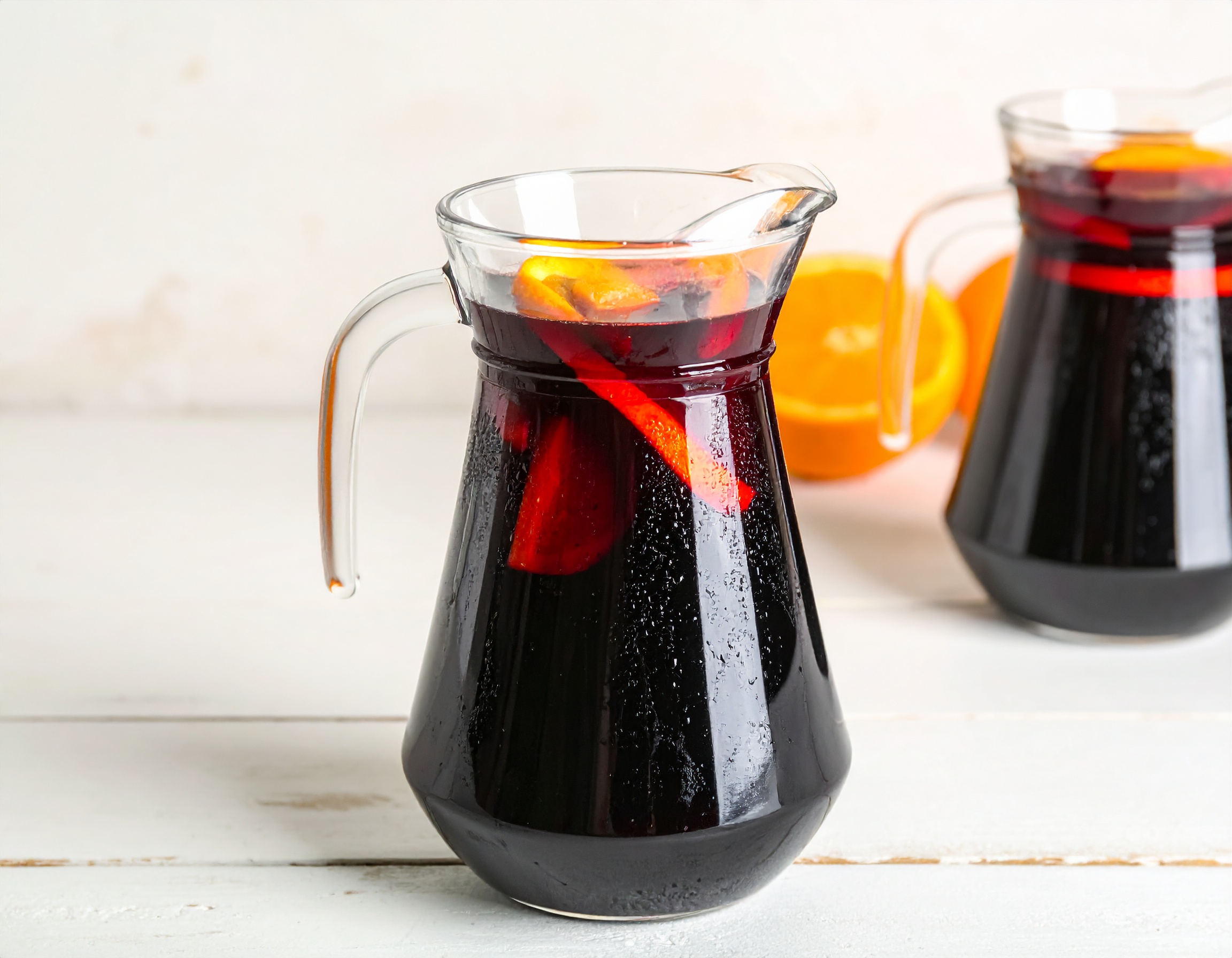
A fresh Spanish wine punch of red wine, brandy and plenty of fruit, made for long, sunny afternoons.
Ingredients
- Grape brandy120 ml
- Red wine, a dry, fruity Spanish red750 ml
- Cointreau60 ml
- Orange juice, freshly squeezed120 ml
- Lemon, cut into thin slices1 whole
- Apple, cut into small pieces1 whole
- Orange, half squeezed, half cut into thin slices1 whole
- Simple syrup, to taste (1 part Sugar, 1 part Water)45 ml
- Raspberry, for extra fruitiness (optional)100 g
- Soda water, for a light fizz (optional)top up
- Orange, to garnish (optional)1 wheel
Method
- Cut the orange and lemon into thin slices and the apple into small pieces.
- Put the fruit, and the raspberries if using, into a large jug.
- Pour the red wine, brandy, Cointreau, orange juice and simple syrup over the fruit and stir well.
- Chill the jug for at least 4 hours, ideally overnight, so the fruit can flavour the wine.
- Fill glasses with ice, pour in the sangria, top with soda water for a light fizz if you like, and garnish with an orange wheel.
About this drink
Sangria comes from Spain, where cheap red wine was mixed with fruit and a little spirit to make it more refreshing in the summer heat. The name comes from the Spanish word for blood, sangre, a nod to the wine's deep colour. Today sangria is a fixture of tapas bars and summer parties around the world, and every family has its own version.
Questions and answers
Can I make Sangria the day before a party?
Yes, it is actually recommended: the longer the fruit steeps in the wine, the more flavour it gives. At least four hours, ideally overnight, gives the best result.
Which brandy suits sangria?
Spanish grape brandy is the traditional choice, but cognac or any ordinary brandy works well too. The difference is subtle in the finished drink.
Should Sangria be sparkling?
It's optional. A splash of soda water just before serving adds a light, refreshing fizz, but the classic version is still and perfectly good without it.