Death in the Afternoon
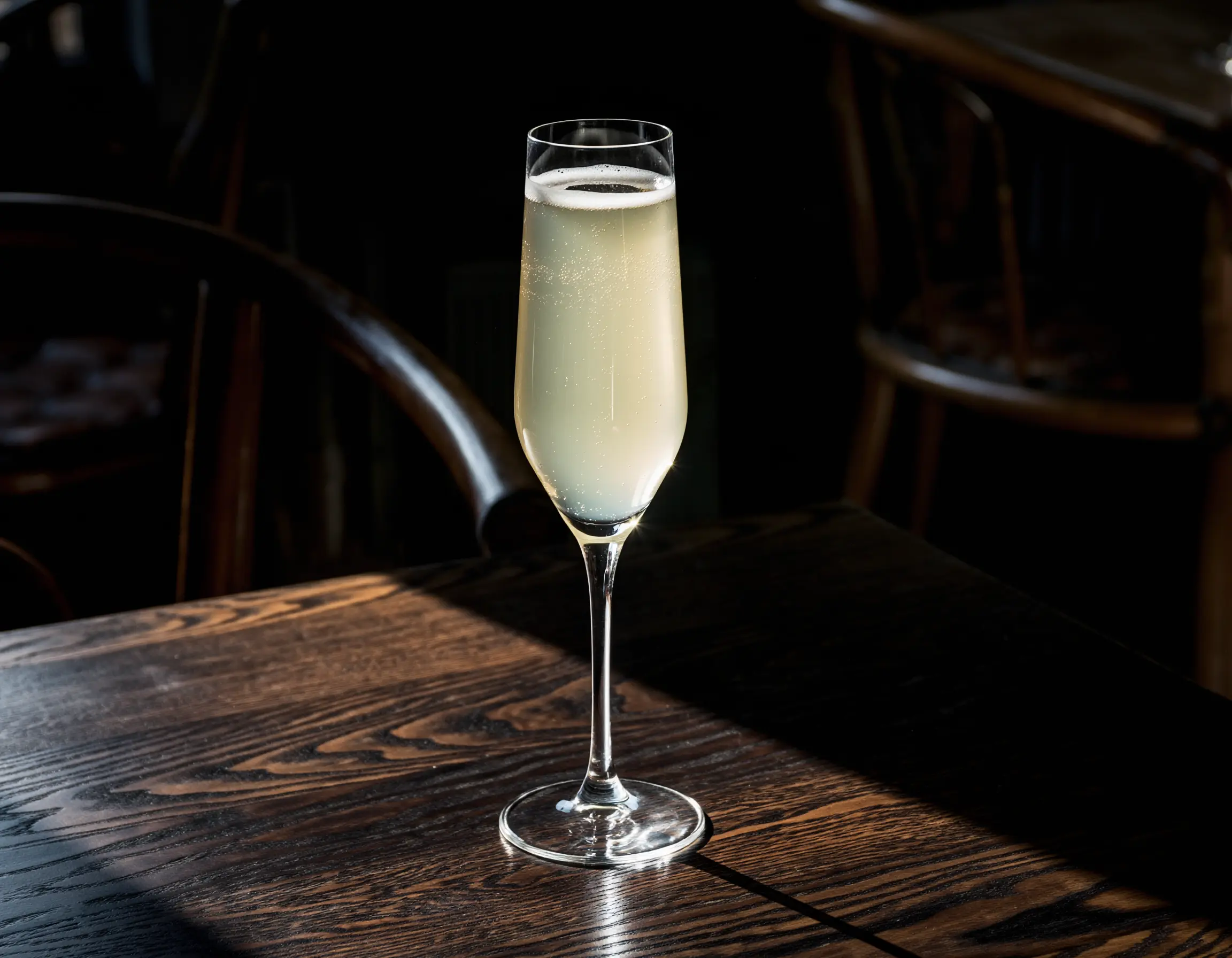
Ernest Hemingway’s legendary cocktail combining absinthe and Champagne for a potent, opalescent aperitif.
SUGGESTED GLASSWARE
Champagne Flute
Recipe
- Absinthe30 ml
- Champagne120 ml
- Simple syrup (1:1), Rich Simple Syrup (2:1)5 ml
- Lemon Peel1 twist
Instructions
Equipment
Description
The Death in the Afternoon is Ernest Hemingway’s famous creation, first published in 1935. This deceptively simple cocktail combines the herbal intensity of absinthe with the effervescence of Champagne, creating a potent and visually striking aperitif that embodies Hemingway’s bold approach to both literature and libations.
Nutritional information
1 cocktail (150ml)Tips & Notes
Use authentic, high-quality absinthe with pronounced herbal and anise flavors - avoid low-quality substitutes as they will significantly impact the cocktail's character.
Pour the Champagne slowly to achieve the signature opalescent cloudiness as the absinthe emulsifies with the bubbles - this visual effect is essential to the drink's appeal.
This is an extremely potent cocktail - Hemingway suggested drinking 3-5 slowly, but most modern drinkers should limit themselves to one and sip it gradually as an aperitif.
The optional simple syrup helps balance the intense herbal bitterness for modern palates - adjust the amount based on your preference for sweetness.
Serve in a well-chilled glass to maintain the effervescence and prevent the drink from becoming too warm, which would intensify the alcohol heat.
Can I substitute Prosecco or other sparkling wine for Champagne?
While Champagne is traditional and preferred for its crisp, dry character, you can substitute with other dry sparkling wines like Cava or Prosecco. Avoid sweet sparkling wines as they will clash with the absinthe’s herbal bitterness.
Is this cocktail safe to drink given absinthe's reputation?
Modern absinthe is perfectly safe when consumed responsibly. The myths about absinthe causing hallucinations have been debunked – it’s simply a high-proof herbal liqueur. However, this cocktail is very strong, so drink slowly and limit consumption.
Why does the drink turn cloudy when I add the Champagne?
The cloudiness, called the “louche effect,” occurs when water (or in this case, Champagne) is added to absinthe. The essential oils in the absinthe become suspended in the liquid, creating the characteristic opalescent, milky appearance that’s essential to the drink’s visual appeal.
Can I make this cocktail less strong?
Yes, you can reduce the absinthe to 15-20ml and increase the Champagne accordingly. Adding the optional simple syrup and lemon juice also helps balance the intensity. However, reducing it too much will lose the cocktail’s distinctive character.
Related Herbal cocktails
Love & Murder
A bold, theatrical cocktail from Porchlight NYC, balancing Green Chartreuse and Campari with lime and saline for a striking neon green-ruby appearance and intense herbal-bitter flavor profile.
Gin & Tonic
The perfect balance of premium gin and high-quality tonic water, served ice-cold in a balloon glass with precise technique.

Hugo Spritz
A refreshing Italian aperitif cocktail made with elderflower liqueur, prosecco, soda water, fresh mint, and lime.

Vermouth Spritz
The ultimate Italian aperitivo cocktail featuring vermouth, prosecco, and soda water in the perfect 3-2-1 ratio.

Industry Sour
A bold equal-parts cocktail combining Fernet Branca, Green Chartreuse, fresh lime juice, and simple syrup - the ultimate bartender's drink.

Left Hand
A sophisticated modern classic that bridges the Manhattan and Negroni, featuring bourbon, Campari, sweet vermouth, and chocolate bitters.

Emerald Swizzle
A rich, tropical swizzle showcasing green Chartreuse with pineapple, coconut, almond, and lime in perfect harmony.
Dolce Vita
A vibrant Italian-inspired cocktail balancing bittersweet amaretto, herbal rabarbaro, and bright citrus notes in a modern riff on the classic Amaretto Sour.

Lucien Gaudin
A sophisticated classic cocktail that represents a refined evolution of the Negroni family, balancing gin, Campari, orange liqueur, and dry vermouth into a harmonious aperitif.

Sea Legs
A sophisticated modern classic combining peated whisky, mezcal, almond orgeat, and lime with savory celery bitters for a complex smoky-sour experience.
Bitter Mai Tai
A modern twist on the classic Mai Tai, replacing the second rum with Campari for a bittersweet, complex tropical cocktail.

Spanish Monk
A sophisticated gin cocktail featuring the herbal complexity of Green Chartreuse, balanced with fresh lemon juice and enriched with silky egg white foam.
