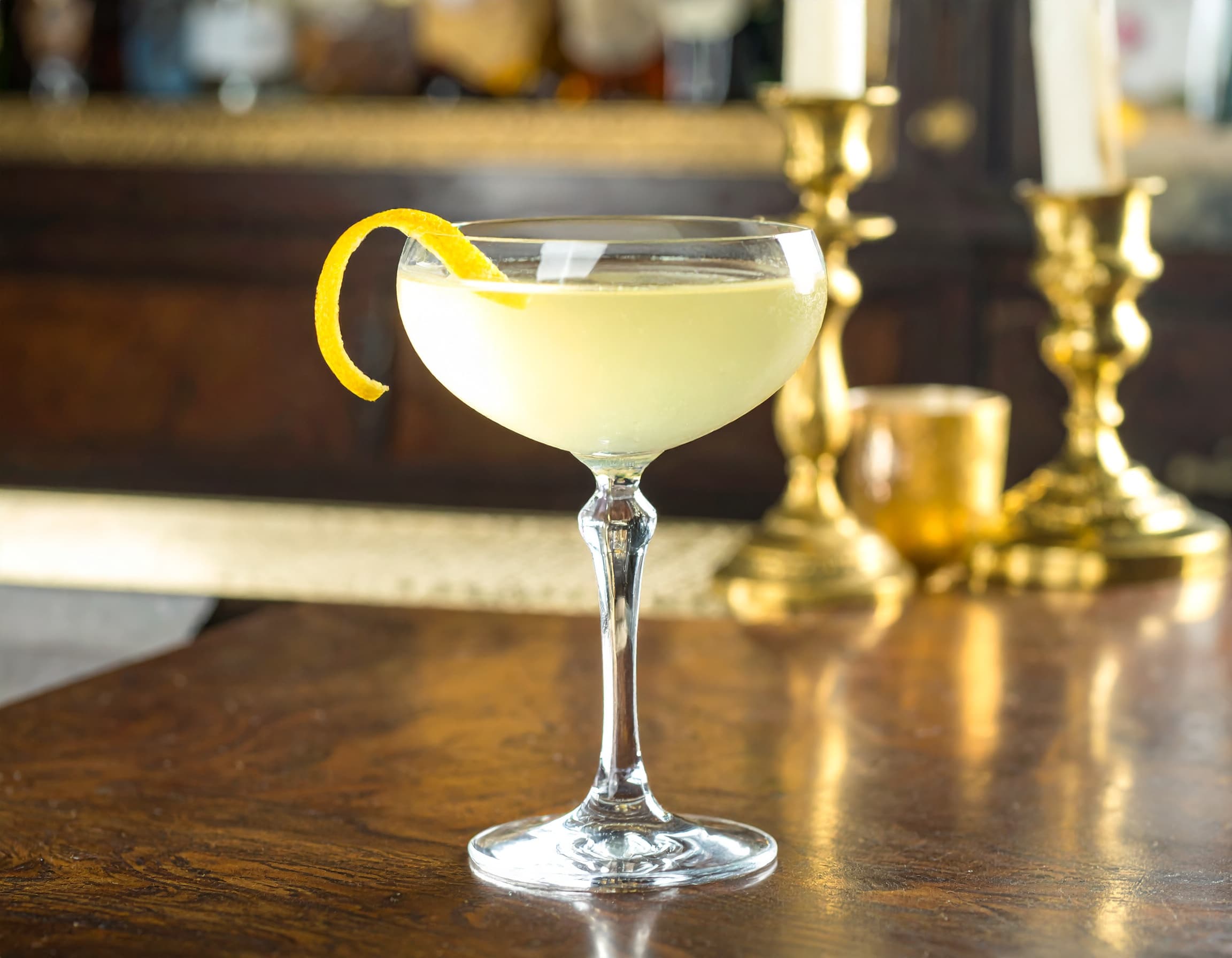
Ford Cocktail
A refined pre-Prohibition cocktail featuring gin, dry vermouth, Bénédictine, and orange bitters in perfect harmony.
Recipe
- Old Tom Gin45 ml
- Dry Vermouth45 ml
- Bénédictine7.5 ml
- Orange Bitters2 dashes
- Lemon Peel1 twist
Instructions
Equipment
Description
The Ford Cocktail is a sophisticated pre-Prohibition era drink that first appeared in George J. Kappeler’s Modern American Drinks in 1895. This elegant cocktail showcases the art of classic mixology through its perfectly balanced combination of gin, dry vermouth, Bénédictine, and orange bitters. While similar in structure to a Martini, the addition of Bénédictine transforms it into something uniquely complex and luxurious. The Ford represents the golden age of cocktail crafting, where every ingredient serves a purpose in creating a harmonious and memorable drinking experience.
Nutritional information
1 cocktail (130ml)Tips & Notes
Use premium spirits as this is a spirit-forward cocktail where quality makes a significant difference in the final result.
Adjust the Bénédictine amount to taste - start with 7.5ml and increase slightly if you prefer more herbal sweetness, but be careful not to overpower the gin.
The stirring technique is crucial - stir gently to avoid over-dilution while ensuring proper chilling and integration of flavors.
Fresh, high-quality orange bitters are essential for the proper citrusy brightness that balances the herbal elements.
The expressed citrus oils from the twist are not optional - they provide essential aromatic compounds that complete the cocktail experience.
Can I substitute the Bénédictine with another herbal liqueur?
While Bénédictine is traditional and provides the cocktail’s signature flavor profile, you could experiment with other herbal liqueurs like Yellow Chartreuse (use less due to higher proof) or DOM Bénédictine if available. However, the unique honey and herb blend of Bénédictine is difficult to replicate exactly.
What's the difference between using Old Tom gin versus London Dry gin?
Old Tom gin adds subtle sweetness and complexity that complements the Bénédictine beautifully and was historically accurate for this 1895 recipe. London Dry gin provides a crisper, more juniper-forward profile that creates a slightly drier, more modern interpretation. Both work excellently – choose based on your preference.
How important is the quality of dry vermouth in this cocktail?
Very important, as vermouth makes up a significant portion of the cocktail. Use a fresh, high-quality French dry vermouth and store it refrigerated. Stale vermouth will negatively impact the cocktail’s balance and overall flavor profile significantly.
Can I batch this cocktail for parties?
Yes, the Ford Cocktail batches well. Multiply ingredients by servings needed, combine in a bottle, and store chilled. Add about 25% water to account for dilution that would occur during stirring. Serve over ice in chilled glasses and add fresh garnish to each serving.
Related Herbal cocktails
Love & Murder
A bold, theatrical cocktail from Porchlight NYC, balancing Green Chartreuse and Campari with lime and saline for a striking neon green-ruby appearance and intense herbal-bitter flavor profile.
Gin & Tonic
The perfect balance of premium gin and high-quality tonic water, served ice-cold in a balloon glass with precise technique.

Hugo Spritz
A refreshing Italian aperitif cocktail made with elderflower liqueur, prosecco, soda water, fresh mint, and lime.

Vermouth Spritz
The ultimate Italian aperitivo cocktail featuring vermouth, prosecco, and soda water in the perfect 3-2-1 ratio.

Industry Sour
A bold equal-parts cocktail combining Fernet Branca, Green Chartreuse, fresh lime juice, and simple syrup - the ultimate bartender's drink.

Left Hand
A sophisticated modern classic that bridges the Manhattan and Negroni, featuring bourbon, Campari, sweet vermouth, and chocolate bitters.

Emerald Swizzle
A rich, tropical swizzle showcasing green Chartreuse with pineapple, coconut, almond, and lime in perfect harmony.
Dolce Vita
A vibrant Italian-inspired cocktail balancing bittersweet amaretto, herbal rabarbaro, and bright citrus notes in a modern riff on the classic Amaretto Sour.

Lucien Gaudin
A sophisticated classic cocktail that represents a refined evolution of the Negroni family, balancing gin, Campari, orange liqueur, and dry vermouth into a harmonious aperitif.

Sea Legs
A sophisticated modern classic combining peated whisky, mezcal, almond orgeat, and lime with savory celery bitters for a complex smoky-sour experience.
Bitter Mai Tai
A modern twist on the classic Mai Tai, replacing the second rum with Campari for a bittersweet, complex tropical cocktail.

Spanish Monk
A sophisticated gin cocktail featuring the herbal complexity of Green Chartreuse, balanced with fresh lemon juice and enriched with silky egg white foam.
